Supplemental Insurance Claims for Roof Damage: How They Work in Texas

You filed your roof insurance claim, the adjuster came out, and you received a settlement. But what if that settlement does not reflect the full scope of damage that was documented — or what if more damage was discovered once the roofing work began? That is where supplemental claims come in. This article is an educational overview of how the supplemental-claim process generally works in Texas. The request and the conversation are between the homeowner and the carrier; our role as a roofing contractor is limited to documentation.
What Is a Supplemental Claim?
A supplemental claim is a request from the homeowner to their insurance carrier for an adjustment of an existing, already-open claim. It is not a new claim — it is an amendment to the original claim that addresses items the initial estimate missed, undervalued, or could not have included (for example, damage that was only visible after tear-off).
Supplemental claims are common and routine. Carriers expect them, particularly on roofing losses, where hidden damage often surfaces during the actual repair work.
When Homeowners Typically Request One
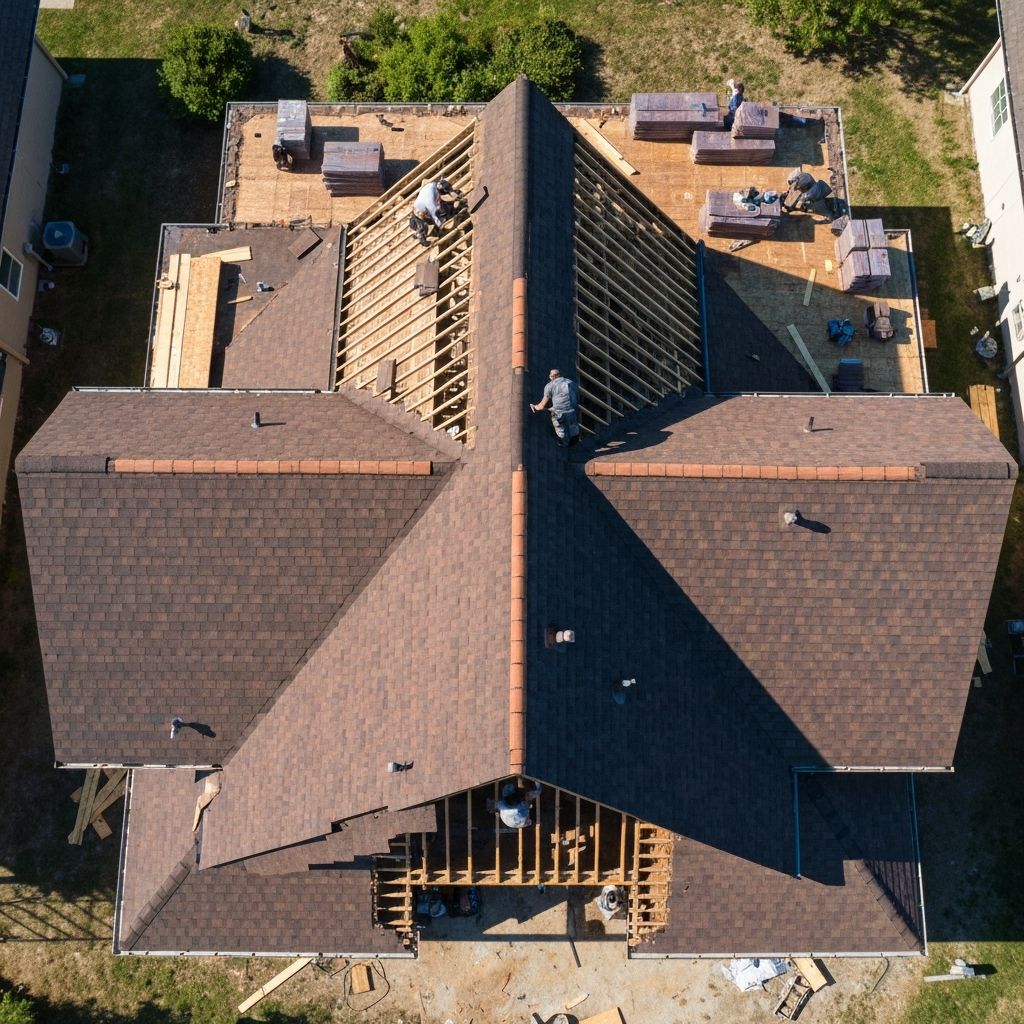
Hidden damage discovered during repairs
Once shingles are removed, the roofing crew can see what was underneath. Common findings include:
- Rotted or damaged decking that was not visible from above
- Water damage to the underlayment
- Compromised flashing around vents and chimneys
- Structural damage that was not apparent before tear-off
- Additional hail impacts on the underlayment
Items the original estimate did not include
Initial estimates may not account for:
- Current material costs (which fluctuate)
- Code-required upgrades
- Steep-roof charges for difficult-to-access slopes
- Required permit fees
- Ventilation work mandated by current code
Damage that was missed
Adjusters working through a heavy storm-season caseload sometimes overlook:
- Soft-metal damage on vents, flashings, and gutters
- Window screen damage
- Fence damage from the same event
- AC unit fin damage
- Garage door damage
How the Process Generally Works
Step 1: Document what changed.
If additional damage is discovered during repairs, the homeowner (or the contractor at the homeowner's request) documents it:
- Photographs of the newly discovered damage
- Original damaged materials kept on-site when possible
- A written explanation of why the additional work is necessary
- Updated cost estimates for the additional scope
Step 2: Prepare the supporting documentation.
If asked, your roofing contractor can prepare:
- An itemized list of the additional work
- An Xactimate estimate (the same software many carriers use)
- Photo documentation of the discovered damage
- An explanation of why the items were not in the original scope
This is documentation. The homeowner submits the supplemental request to the carrier; the contractor's role is to produce a clear record of what was found.
Step 3: Homeowner submits the request to the carrier.
The supplemental request goes from the homeowner to the carrier with:
- Reference to the original claim number
- The supporting documentation prepared above
- A request for re-inspection if the carrier wants one
Step 4: The carrier reviews.
The carrier may:
- Approve the supplement as submitted
- Send an adjuster for a re-inspection
- Partially approve the supplement
- Request additional documentation
What the carrier covers depends on the policy and their adjustment of the loss. The decision is theirs.
Common Items Addressed Through Supplements
Decking replacement
Damaged plywood or OSB decking is often not visible until shingles are removed. Carriers commonly address it through a supplement.
Code upgrades
If building codes have changed since your roof was installed, current code may require items the original estimate did not contemplate — updated ventilation, ice-and-water shield in certain locations, drip edge, fastener-pattern changes. Policy language and Texas code together determine what is covered.
Steep-roof charges
Roofs with steep pitches (7/12 and above) require additional safety equipment and labor. These costs are sometimes underestimated in initial estimates.
Overhead and profit
When a project requires coordination of multiple trades, general-contractor overhead and profit (typically 10% + 10% in Xactimate) may be appropriate to include. Whether it is allowed in your claim depends on your policy and the scope of work.
Timeline
Rough expectations vary by carrier and complexity:
- Documentation prepared by the contractor: 1–2 days after discovery
- Carrier review: typically 5–15 business days
- Re-inspection, if required: 1–2 weeks to schedule
- Payment after approval: typically 5–10 days
If a Supplement Is Denied
If the carrier denies all or part of the supplemental request:
- Request a written explanation
- Provide additional documentation if it addresses the carrier's stated concerns
- Request a re-inspection with your contractor on-site
- Ask for supervisor review
- Review your policy's appraisal clause as a possible next step
Red Flags to Watch For
Be cautious of any contractor who:
- Asks you to sign over your entire claim (an "assignment of benefits")
- Promises to "get you more money" from your insurance
- Offers to "waive" or absorb your deductible (illegal in Texas)
- Pressures you to begin work before the scope is approved
- Cannot explain the supplemental process clearly
- Does not use Xactimate or a comparable industry-standard estimating tool
Where Hive Fits
If you request it, our HAAG-certified team can produce updated documentation when additional damage is discovered during repairs or when hidden damage surfaces after tear-off. That documentation is yours; you submit any supplemental request to your carrier. We do not file supplements on your behalf, we do not negotiate with your carrier, and we do not collect insurance funds for you. Hive is a roofing contractor — we inspect, document, and build.
About Hive Team
Hive Team is a roofing expert at Hive Roofing and Solar with over 15 years of experience in the industry. He specializes in residential roofing and is passionate about helping homeowners protect their investments.
Need a Roof Inspection?
Our experts can assess your roof's condition and provide honest recommendations.
Get Free Estimate